

Furnace Won't Turn On? What to Check Before You Call (and When to Stop Trying)
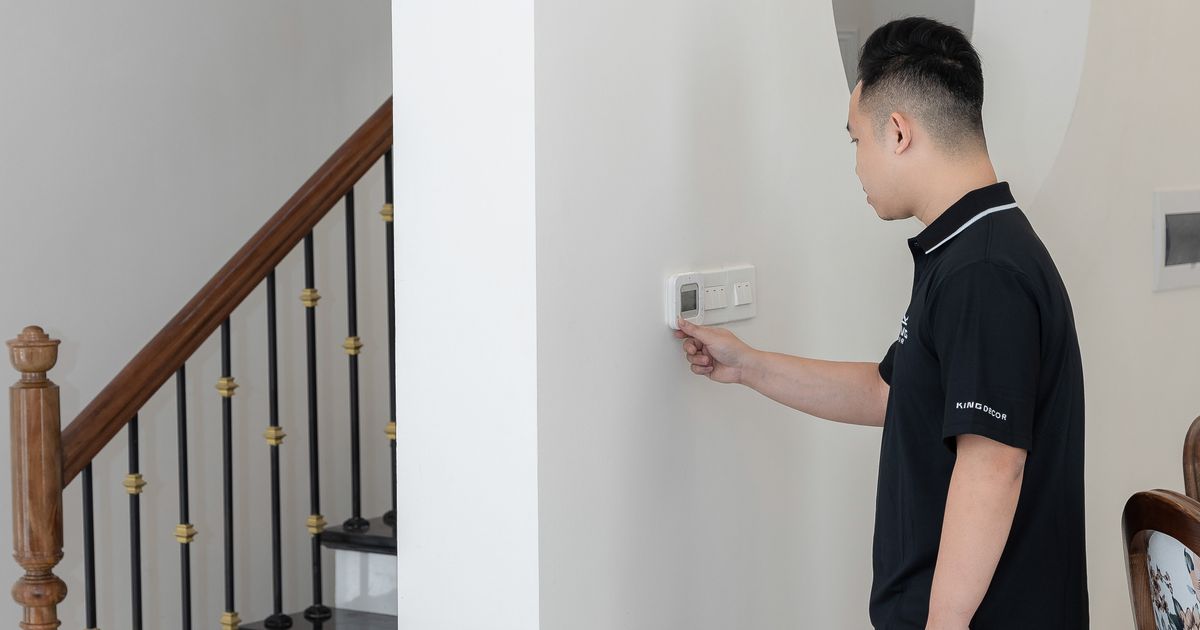
It's 6 pm, it's 38 degrees outside, and the thermostat says 63 and falling. You turn it up. Nothing happens. No click, no whoosh, no fan. Just a quiet house getting colder.
A furnace not turning on is the call we get most once it gets cold, and before you make it, there are a handful of things worth checking yourself. They take about ten minutes, they need no tools, and between them they account for a surprising share of the no-heat calls we run every November. Some of them are a little embarrassing, which is why we're listing them.
Start with the thermostat, then the furnace power switch and breaker, the blower door, the filter, and the gas valve, in that order, and finish by reading the status light. If the furnace is still silent after that, or it keeps trying and quitting, that's where we come in.
Why is my furnace not turning on? The usual causes
Most furnaces that won't start are fine. A safety control is holding them back, and furnaces are built to hold back for a lot of reasons. Here are the common ones, roughly in the order we find them.
- The thermostat is not actually asking for heat (wrong mode, dead batteries, a schedule, or a setpoint below room temperature).
- The furnace has no power (a switch that got bumped, a tripped breaker, or a blown fuse).
- The blower door is not closed all the way, which cuts power to the furnace on purpose.
- The filter is clogged, the furnace overheated, and a safety switch locked it out.
- The gas supply is off or interrupted.
- The condensate drain on a high-efficiency furnace is clogged, so the pressure switch will not close.
- The flame sensor is dirty, so the furnace lights, runs a few seconds, and shuts down.
- The igniter has failed, so the furnace goes through its startup and never lights.
You can check the first five yourself. The last three usually need a technician.
Step 1: Check the thermostat
Yes, really. Start here even if you are sure it is fine.
- The mode should be set to HEAT, not COOL, OFF, or FAN.
- Set it a couple of degrees above the current room temperature. Most thermostats won't call for heat until there is at least a one-degree gap, and some want two.
- If the screen is blank or dim, change the batteries. Many thermostats run on two AAs even when they are wired to the furnace.
- Look for a schedule, a HOLD, or an AWAY setting that is overriding you. Smart thermostats are good at this.
- If you have a heat pump, make sure it did not get switched to EM HEAT. That setting shuts the heat pump off. We explain it in what EM heat means on your thermostat.

After any change, give the furnace five minutes. Most have a built-in delay, and turning the thermostat up and down repeatedly only resets that timer.
Step 2: Find the furnace power switch and check the breaker
Somewhere near the furnace, often on the wall or on the side of the unit itself, there is a switch that looks exactly like a light switch. It is the furnace's power switch, and it gets flipped off by accident more than you would think. Someone brushes it carrying a box into the garage, or a kid flips it, or it gets turned off during summer work on something else and never turned back on. Flip it on and listen.
Next, go to the electrical panel and look for the furnace breaker. If it is in the middle position or sitting on OFF, push it fully to OFF and then back to ON, one time. If it trips again right away, stop. A breaker that will not hold is protecting you from something, and resetting it repeatedly makes that worse. Our post on why breakers keep tripping covers what each kind of trip usually means.
Most furnaces built in the last 25 years or so also have a small fuse on the control board. If the switch is on and the breaker is on and the furnace is still completely dead, that fuse is the next thing we check, and it's a quick one for us.

Step 3: Make sure the blower door is closed all the way
On most furnaces, the lower panel on the front, the one that covers the blower, has a safety switch behind it. When the door is off or not seated, the switch cuts power to the whole furnace so nobody reaches into a spinning blower. If anyone has changed the filter recently, or the door got bumped, it may be sitting a quarter-inch out of place.
Push it firmly into place until it clicks or seats flush. On some furnaces you have to press the door in and then slide it up or down to latch. If the furnace comes to life, that was it.
Step 4: Pull the filter and look at it
A badly clogged filter doesn't usually stop a furnace from starting. What it does is make the furnace overheat a few minutes into the cycle, which trips the high limit switch and shuts the burners off. After enough of those, many furnaces lock themselves out and refuse to fire until the power is cycled.
So if your furnace has been running short cycles for a week and now won't run at all, the filter is the first suspect. Pull it out and hold it up to a light. If you cannot see light through it, replace it, then turn the furnace power switch off for thirty seconds and back on to clear the lockout.
Step 5: Check the gas supply
Look at the gas line going into the furnace. There is a valve with a handle on it. When the handle is parallel to the pipe, gas is on. When it is crossways, gas is off. It is rare for this to get turned off by accident, but it happens after plumbing work or an appliance delivery.
Then check whether your other gas appliances work. If the stove or water heater is also out, the problem is upstream of the furnace and you should call your gas utility.
One thing we don't want you to do: if you smell gas, do not flip switches, do not light anything, and do not go looking for the source. Leave the house, then call your gas company or 911 from outside.
Step 6: Look for the status light
Most furnaces made in the last twenty years have a small window on the blower door with an LED behind it. When something is wrong, that light blinks in a pattern, and the code is printed on a sticker inside the door or on the furnace itself. Two blinks might mean a pressure switch problem, three might mean the igniter did not light, and so on. The codes vary by brand.
You don't have to diagnose it. Just write down what the light is doing, or take a short video with your phone. That is the single most useful thing you can tell us when you call, and it often lets us bring the right part on the first trip.
Is there a reset button on a furnace?
On a gas furnace, usually not in the way people mean. The "reset" on most modern gas furnaces is simply cycling the power: switch off for thirty seconds, then on. That clears a lockout and lets the furnace try again.
Oil furnaces are different. They have a red button on the burner, and it should be pressed once. Pressing it over and over floods the chamber with unburned oil, which is a fire risk.
Either way, one reset is the rule. If the furnace locks out again after a single reset, it is telling you the problem is still there.
The furnace turns on, but no heat comes out
That's a different problem from a furnace that won't start, and the cause is usually one of two parts. If you hear the furnace start up, maybe a small fan runs, then a click, then nothing, the igniter is likely not lighting. If it lights and you hear the burners for a few seconds before it shuts down, the flame sensor is probably dirty and cannot confirm the flame. Both are quick repairs for us and both are things a fall tune-up catches.
If the blower runs and the air coming out is cold, that can also be a thermostat fan setting (FAN set to ON instead of AUTO runs the blower constantly). Switch it to AUTO and see if the cold air stops between cycles.
When to stop and call
- You smell gas. Leave the house, then call.
- The breaker trips again as soon as you reset it.
- You smell burning or hot plastic, or see scorching anywhere on the furnace.
- There is water on the floor around the furnace.
- The furnace has locked out more than once after a reset.
- You went through all six steps and it is still silent.
- The furnace is 15 to 20 years old and this is not its first no-heat episode this year.
Our technicians do furnace repair across Snohomish County and north King County out of our Everett shop, and because our electricians are in-house, the "is it the furnace or is it the panel" question gets answered on one visit instead of two. Maintenance plan members get priority booking, $89 service calls during business hours, and a flat $179 rate for after-hours emergencies, which matters most on a cold evening.
Frequently asked questions
How do I force my furnace to start?
There's no override, on purpose. Almost every reason a furnace refuses to start is a safety control doing its job, and the rest are parts that have failed. The closest thing to forcing it is a single power cycle at the furnace switch after you have fixed the obvious things (thermostat, door, filter). If it will not start after that, something still needs attention.
Why is my furnace not responding to the thermostat?
Dead thermostat batteries, a loose wire at the thermostat or the furnace control board, or a thermostat that is set to a mode other than HEAT. If the thermostat screen works and the settings are right, and the furnace still does nothing, the signal is not making it to the furnace, and that is a quick check for us.
Why does my furnace click but not turn on?
A click with no ignition usually means the furnace is trying to light and cannot. On a modern furnace that points to the igniter or the gas valve. If the click repeats three or four times and then stops, the furnace has locked out.
Why does my furnace run for a few seconds and shut off?
Most of the time, a dirty flame sensor. The furnace lights, the sensor cannot see the flame through the buildup, and the control board shuts the gas off to be safe. Cleaning it takes a technician a few minutes.
One last thing
If you are reading this with a cold house, call (425) 496-7300 and tell us what you tried and what the status light is doing. We'll tell you plainly whether it sounds like a visit or a five-minute fix you can finish yourself. And once the heat is back on, a fall tune-up is how you avoid reading this post again next year.
Customer Testimonials
Service Areas
